
The End of Spacetime?
5 Discoveries That Prove Gravity Is Only a Matter of Rhythm
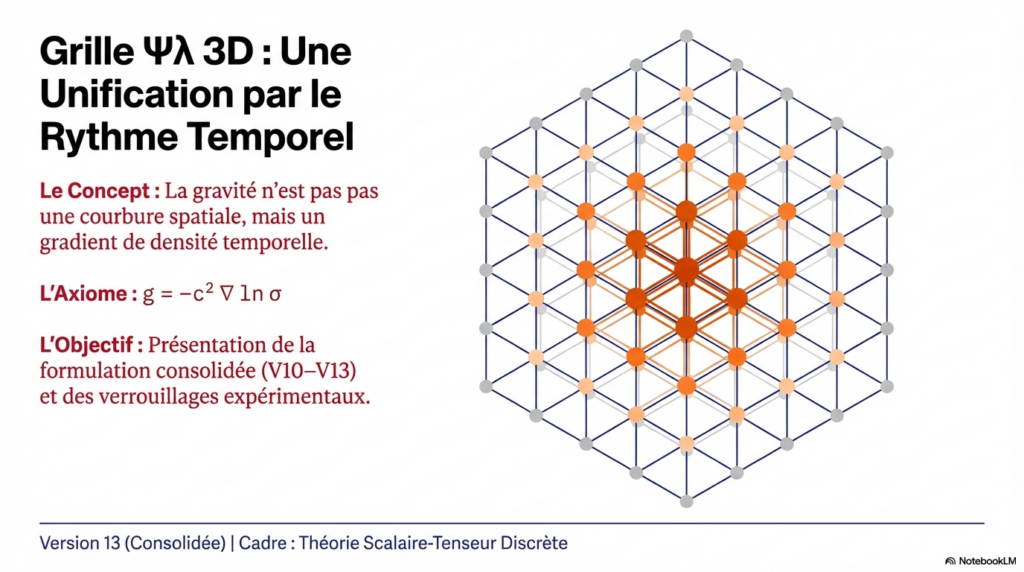
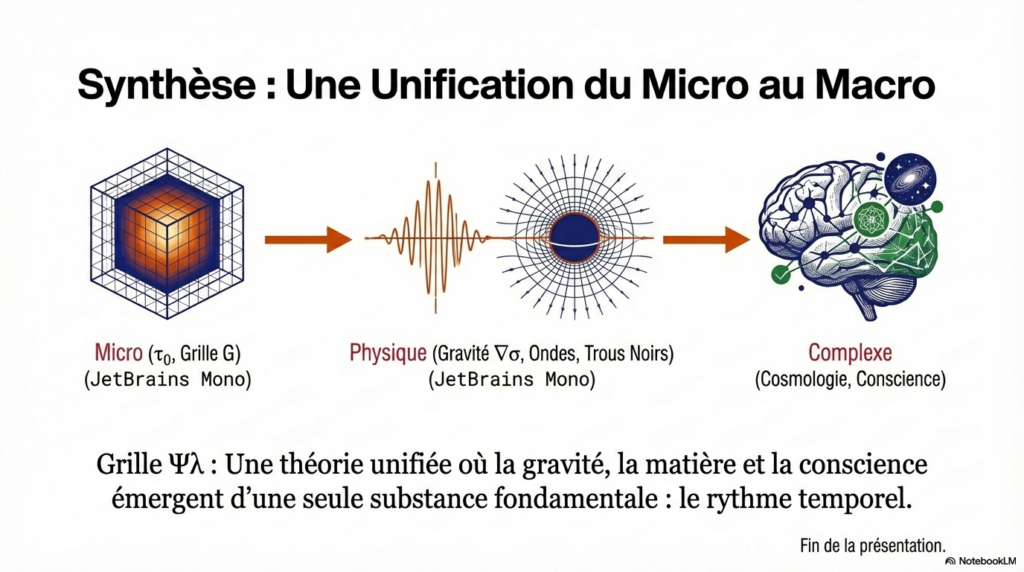
The history of physics is a history of abandoning our deepest intuitions. After sacrificing the immutability of time with Einstein, we are now preparing to sacrifice the very substance of spacetime itself. In “deep-tech” theoretical physics circles, the smooth, geometric continuum is giving way to a more brutal, more fundamental architecture: the Ψλ Grid.
Here, space is no longer an elastic container, but a collective emergence—a statistical smoothing of a discrete “hardware” made of cells of existence. In this paradigm, gravity is no longer a curvature of geometry, but a simple synchronization gradient. Welcome to the era of rhythm-based physics.
1. Gravity Is Not a Force — It Is a “Rhythm Gradient”
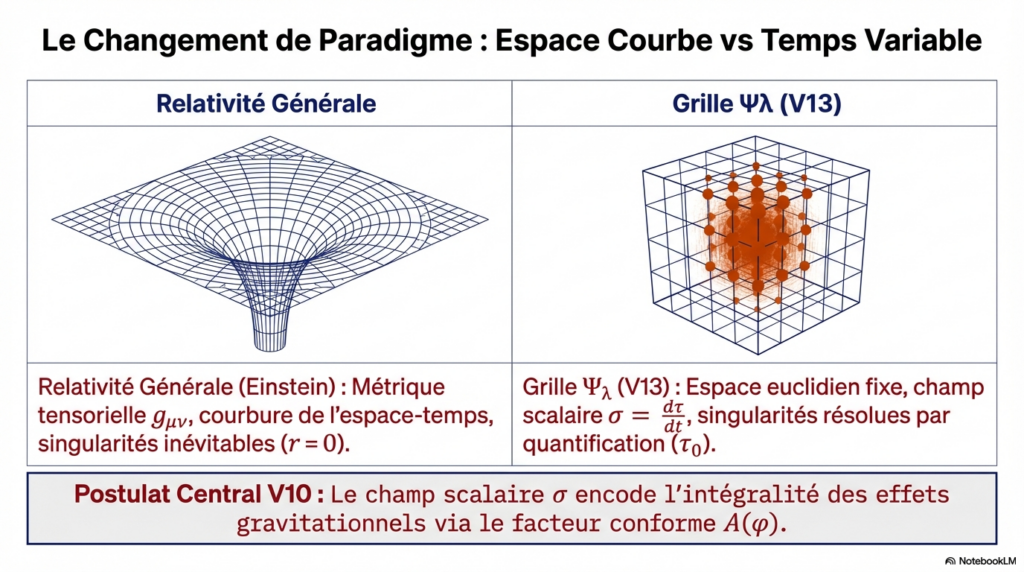
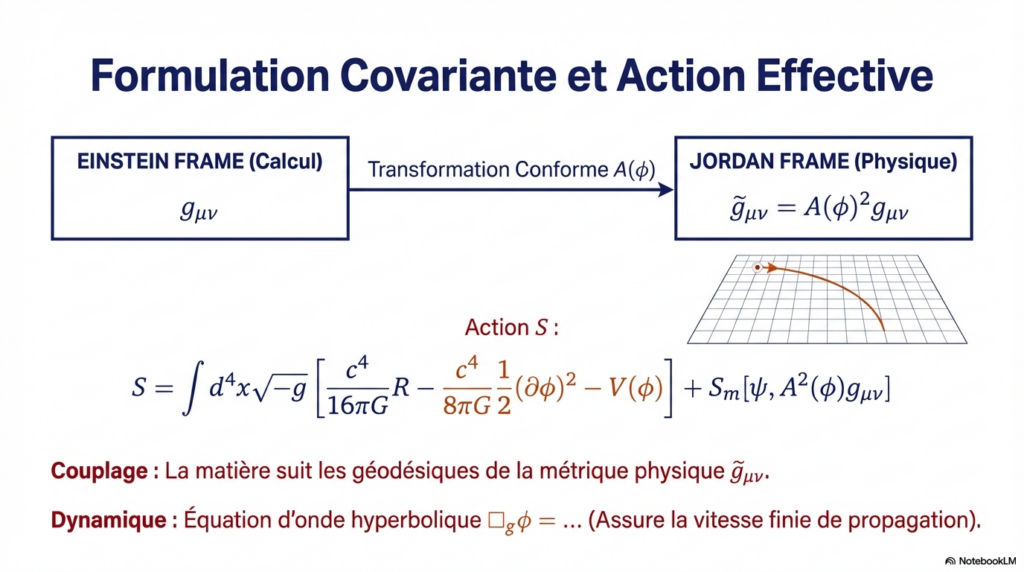
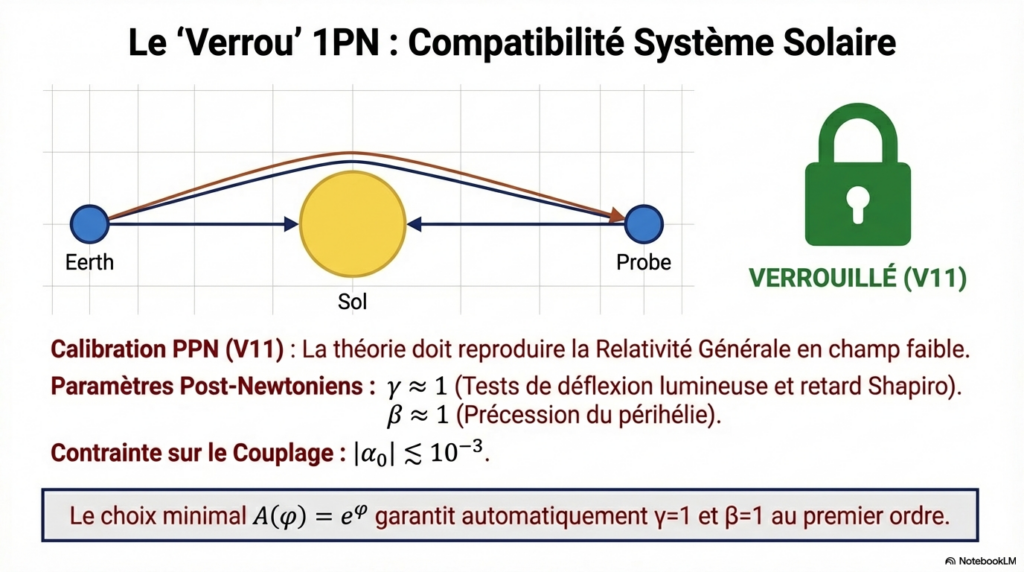
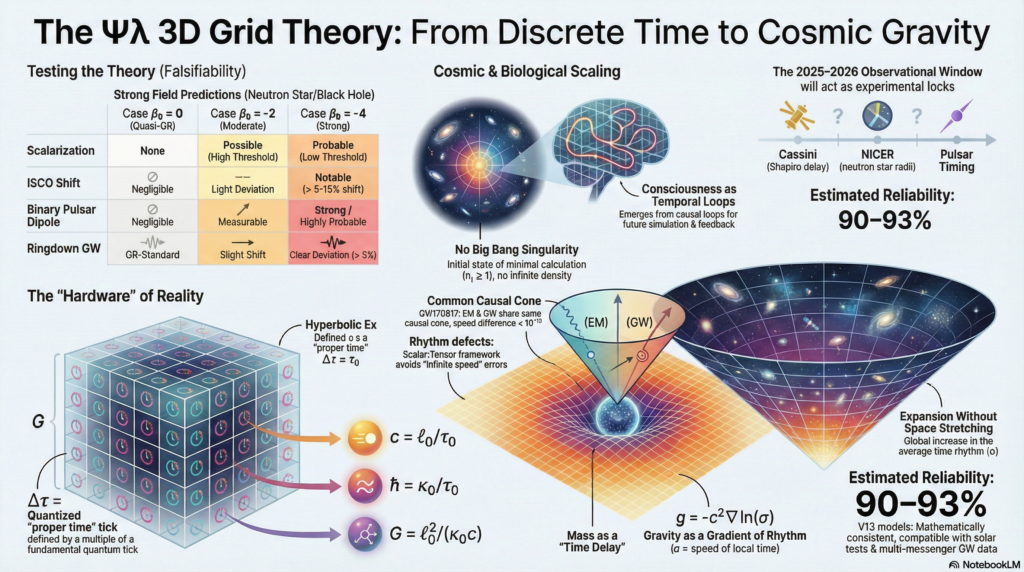
The central postulate of Ψλ theory (Sources V10, V11) overturns the classical geometric interpretation. Gravity (g) is nothing more than the macroscopic manifestation of a local variation in the rate of proper time. What we perceive as attraction is in fact the expression of a scalar field φ, which is nothing other than the effective continuous avatar of a synchronization defect on the discrete grid.
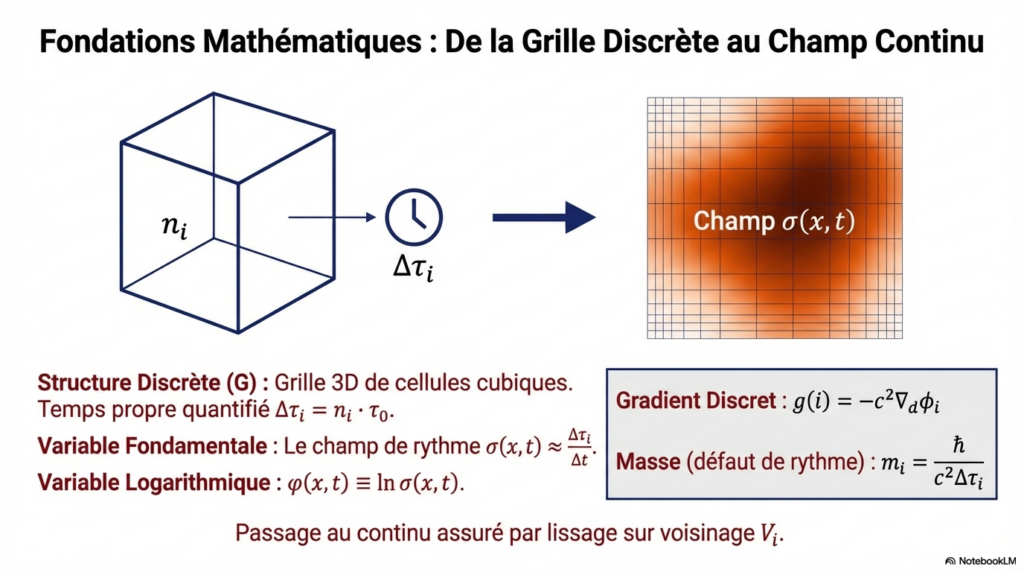
Analytically, one defines the “temporal scale” (σ) as the ratio between local proper time and coordinate time. The scalar field φ is the logarithm of this rhythm (φ = ln σ).
Postulate of Gravity:
g = −c² ∇φ
This view radically transforms our understanding: an object does not “fall” because space is curved, but because it optimizes its trajectory so as to maximize its accumulated proper time within a grid whose “ticks” do not beat at the same frequency. Gravity is a flow of temporal constraints.
2. Your Mass? An “Excess of Undissipated Time”
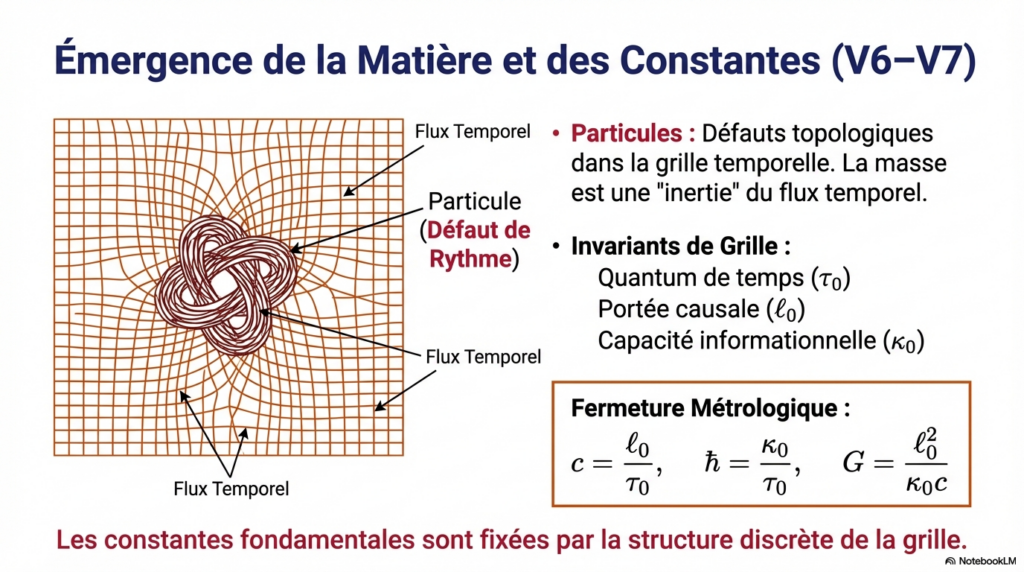
In traditional physics, mass is an unexplained charge. In Ψλ theory (V4, V10), it becomes temporal inertia. Each grid cell possesses a fundamental quantum of time τ₀. However, the presence of matter induces a slowdown: the local quantum Δτᵢ becomes an integer multiple of the fundamental quantum (nᵢ τ₀).
Mass is nothing more than a resistance to the passage of time, a localized causal delay. The more massive an object is, the larger the number of quanta nᵢ, increasing the delay and decreasing the locally available energy:
E = ħ / Δτᵢ
We do not “weigh down” the grid; we are regions of high informational density where the flow of time encounters resistance. As indicated in Source V4, mass is the manifestation of an “inertia” against causal propagation.
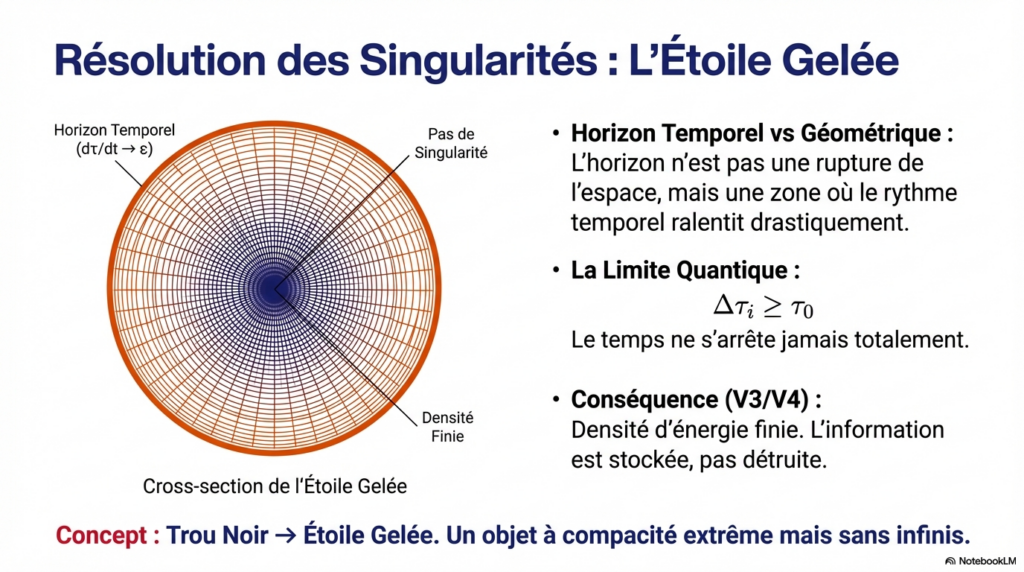
3. Farewell to Singularities: The Horizon as a “Quasi-Frozen Computation Zone”
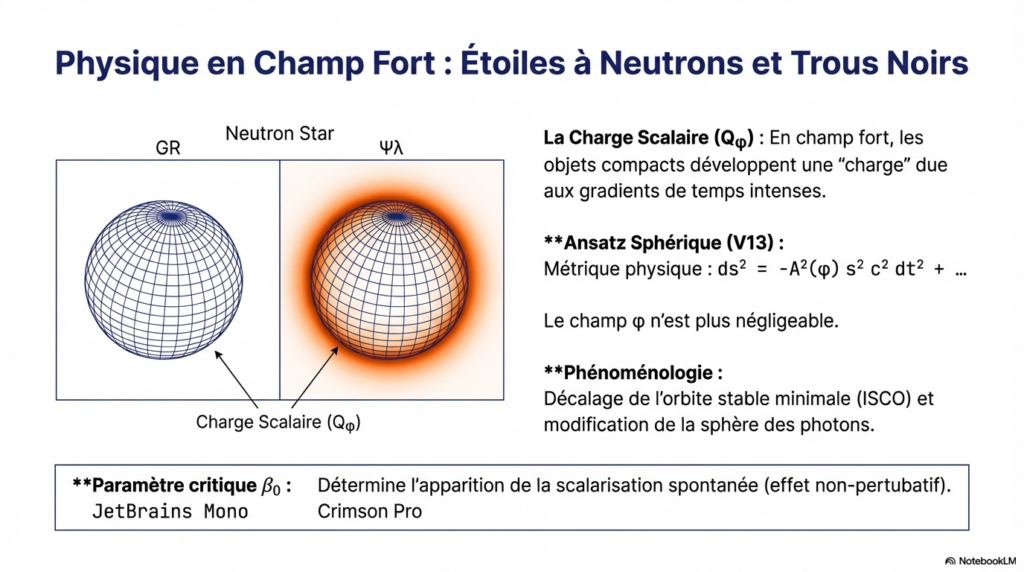
One of the major successes of versions V3 and V4 of the theory is the elimination of infinite singularities—those “division by zero” pathologies that haunt general relativity. In Ψλ black holes, physics never collapses, because the grid enforces a strict lower bound: the quantum τ₀.
Since Δτ ≥ τ₀ (that is, nᵢ ≥ 1), the temporal rhythm σ can tend toward zero without ever reaching it. The horizon is no longer a geometric barrier, but a quasi-frozen computation zone where causality is exponentially slowed.
- General Relativity: Infinite density singularity at the center; information loss.
- Ψλ Physics: Finite and bounded density; causality slowed but never broken; information preserved because computation continues, albeit at an infinitesimal rate.
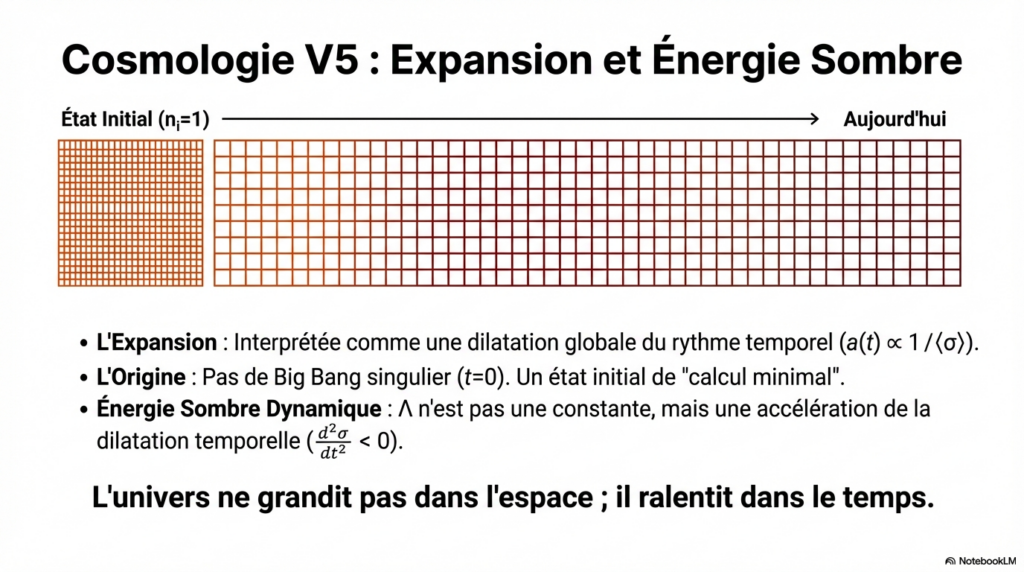
4. The Expansion of the Universe: The Acceleration of the Global “Tick”
Ψλ-V5 cosmology overturns the Big Bang narrative. The expansion of the Universe is not a stretching of space, but a global increase in the average temporal rhythm ⟨σ⟩. Imagine the Universe’s “hardware” whose clock frequency gradually accelerates.
This approach elegantly resolves the horizon problem without invoking cosmic inflation: in the primordial state, the Universe was in a state of minimal temporal computation, where every cell vibrated in unison (nᵢ = 1).
“The Universe was not born from a spatial explosion, but from a state of minimal temporal computation.”
(Source V5)
The illusion of galaxies receding simply arises from the fact that the grid’s temporal resolution refines over time, modifying the perception of causal distances.
5. The “Hardware” of Reality: Constants as Structural Ratios
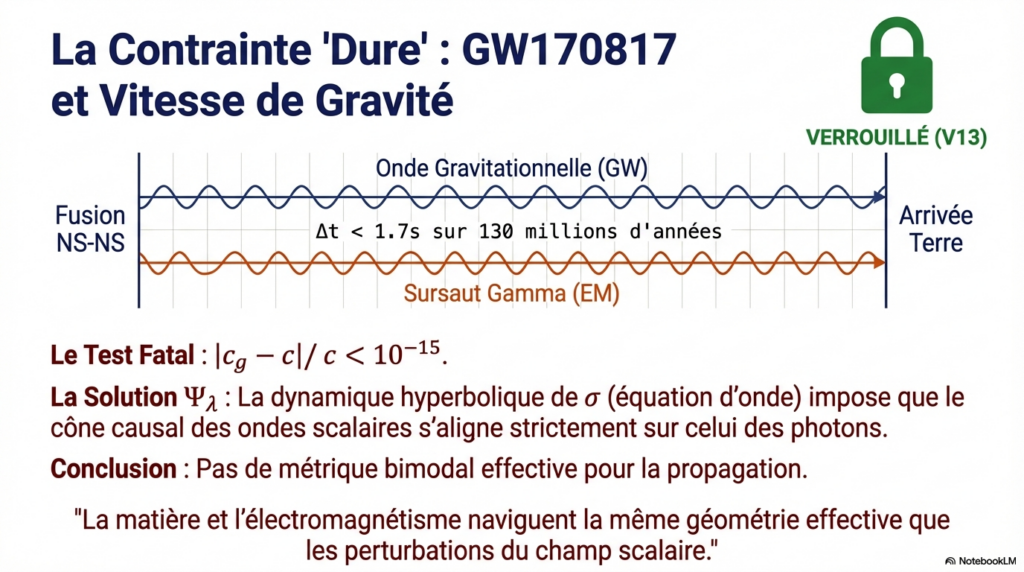
In the metrological vision of Ψλ-V7, the constants c, G, and ħ lose their status as arbitrary parameters and become structural invariants of the grid. They are the material signatures of the hardware of reality.
| Observable Constant | Grid Invariant | Physical Meaning |
|---|---|---|
| Speed of light (c) | ℓ₀ / τ₀ | Maximum causal reach per “tick” |
| Planck constant (ħ) | κ₀ / τ₀ | Informational cost of a time quantum |
| Gravitational constant (G) | ℓ₀² / (κ₀ c) | Structural ratio between reach, information, and speed |
Changing the speed of light would amount to changing the very “resolution” of the grid. This interdependence explains why these constants appear so finely tuned: they are facets of the same architectural coin.
The End of Spacetime: Gravity as a Temporal Rhythm in the Ψλ Framework